
Ein Leben zwischen Kultur und Tourismus
Aktualisiert: 17. Nov. 2018
Wie sieht ein Leben mitten auf dem elft größten See der Erde aus? Um das Leben dort kennen zu lernen, besuchte ich Puno am Titicacasee und startete mit Kendahl eine zweitägige Tour über den See und übernachtete auf eine der Inseln.
Mit dem Nachtbus ging es abends in Cusco los und am nächsten Morgen kamen wir komplett müde (ich frage mich, wie alle anderen im Bus schlafen konnten) in Puno an.
Nachdem wir per Tuk-Tuk zum Hauptplatz fuhren, frühstückten wir zuerst in der Sonne und genehmigten uns ein kleines Schläfchen, bevor wir von einem Tourbus eingesammelt und zum Hafen gebracht wurden. Dort stiegen wir auf ein Boot und fuhren zu den schwimmenden Schilfinseln Uros.
Auf einer der über hundert Inseln zeigte uns eine Bewohnerin, wie die Inseln in Stand gehalten wurden und wie sie leben. Allerdings war das Programm sehr auf den Tourismus ausgelegt. Von der kleinen Insel ging es zur "Hauptinsel". Auf ihr gibt es nur zwei Souvenirshops und ein Restaurant. Also ist es vielleicht die Hauptinsel als Einnahmequelle durch Tourismus, aber nicht die eigentliche Hauptinsel. Wir verließen die schwimmenden Inseln und fuhren ein paar Stunden über den wunderschönen, endlosen blauen See. In der heißen Mittagssonne erreichten wir unser nächstes Ziel, die Insel Amantani.
Auf dieser Insel wurden wir von einheimischen Familien in Empfang genommen und mit in ihr Zuhause genommen. Wie lebten bei Epiphania und Nicolas. Nach einer Stärkung trafen wir uns wieder mit unserer Tourgruppe, bekamen einige Informationen über die Insel und das Leben dort und dann hieß es wanden. Wir bestiegen den höchsten Punkt der Insel. Der Pachatata Tempel auf dem höchsten Berg. Von ganz oben hatten wir einen atemberaubenden Blick über den See, nach Bolivien und auf die Anden. Nach dem Abstieg ging es zum einem Traditionellen Abendessen in unsere Hütte. Nach dem Essen brachte Epiphania uns traditionelle Kleider und wir zogen uns um. In diesem traditionellen Aufzug ging es zum Gemeinschaftshaus, wo eine Tanzveranstaltung statt fand. Eine Band spielte Musik. Nicolas und Epiphania forderten uns immer wieder zum Tanzen auf und wir tanzten bis in die Nacht.
Am nächsten morgen wurden wir früh geweckt, schließlich hatten wir noch einiges vor. Nach einem ordentlichen Frühstück spazierten wir zum Hafen und stiegen wieder auf unser Boot. Nach einer kurzen Bootsfahrt erreichten wir die Insel Taquile. Sie ist für ihre Handarbeit bekannt. Das besondere: Hier stricken nur die Männer.
Wir erklommen den Gipfel der Insel und genossen die wunderbare Aussicht über den blauen See. Wir schauten uns ein wenig auf der Insel um und bestaunten die Handwerksarbeiten der Einheimischen. Unser Guide führte uns einen entlegenen Weg entlang an den Feldern, mit Blick auf den Titicacasee und nach kurzer Zeit erreichten wir unser Lokal für das Mittagessen. Ein Einheimischer zeigte uns, wie traditionelle Seife aus Kakteen gemacht wird und dann gab es auch schon ein traditionelles Mittagessen (Auch in der vegetarischen Version ohne Fisch).
Dann ging es auch schon wieder zurück, Richtung Puno. Wir fuhren ein paar Stunden mit dem Boot, auf dem wir alle in den Schlaf geschaukelt wurden und erreichten am frühen Nachittag Puno.
Da unser Bus in Richtung Cusco erst am späten Abend fuhr, beschlossen Kendahl und ich noch ein wenig durch die Souvenirgeschäfte zu schlendern und uns dann auf dem Weg zum Plaza de Aramas zu machen. Dort kamen wir allerdings nie an. Wir trafen auf einen Markt und fanden ein Sportplatz, auf dem gerade ein Basketballturnier statt fand. Von allen Einheimischen angestarrt schauten wir uns das wirklich schlechte Spiel an und gingen weiter über den Markt. Bevor es dann dunkel wurde, machten wir uns auf den Weg zum Busterminal und verbrachten dort noch einige Stunden mit Kartenspielen, bevor wir in den Bus steigen konnten. Nach einer weiteren schlaflosen Nacht kamen wir morgens in Cusco an. Der Kaffee zum Frühstück war diesmal besonders gut. Nach kurzem Ausruhen und berichten wie unser Trip war, ging es dann zur Arbeit. Gut, dass im Waisenhaus immer was los ist, so hatte ich keine Zeit müde zu werden.
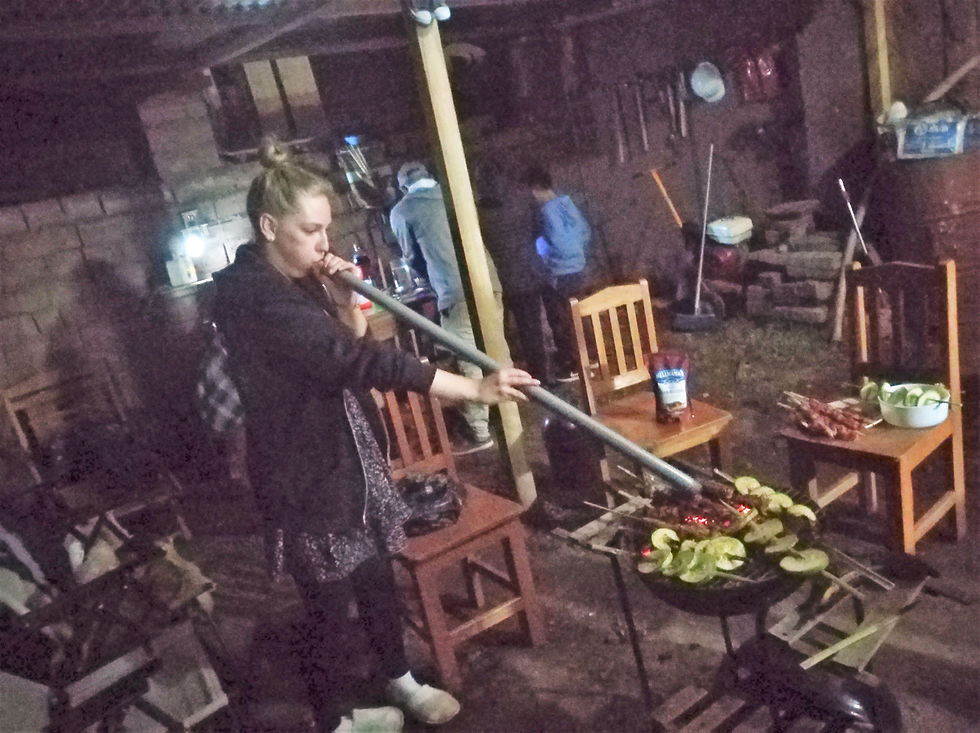
Am Abend kam dann noch Familienbesuch und wir haben gegrillt und Lagerfeuer gemacht. Das war ein schöner Abschluss für dieses aufregende und unglaublich schöne Wochenende.
A life between culture and tourism
What does life look like in the middle of the eleventh largest lake on earth? To experience life there, I visited Puno on Lake Titicaca and started a two-day tour over the lake with Kendahl and spent the night in one of the islands.
The night bus left in the evening in Cusco and the next morning we arrived completely tired (I wonder how everyone else could sleep on the bus) in Puno.
After we went by tuk-tuk to the main square, we first had breakfast in the sun and allowed ourselves a little nap, before we were collected by a tour bus and brought to the port. There we got on a boat and drove to the floating reed islands Uros.
On one of the more than one hundred islands, one resident showed us how the islands were maintained and how they live. However, the program was designed very much for tourism. From the small island we went to the "main island". There are only two souvenir shops and a restaurant on it. So maybe it's the main island as a source of income through tourism, but not the actual main island. We left the floating islands and drove for a few hours over the beautiful, endless blue lake. In the hot midday sun we reached our next destination, the island Amantani.
On this island, we were welcomed by local families and taken to their homes. How did Epiphania and Nicolas live? After a refreshment we met again with our tour group, got some information about the island and the life there and then it was called. We climbed the highest point of the island. The Pachatata temple on the highest mountain. From the top we had a breathtaking view over the lake, to Bolivia and the Andes. After the descent we went to a traditional dinner in our hut. After dinner Epiphania brought us traditional clothes and we changed our clothes. In this traditional elevator we went to the community center, where a dance event took place. A band played music. Nicolas and Epiphania kept calling us to dance and we danced into the night.
The next morning we were awakened early, after all, we had a lot in mind. After a decent breakfast we walked to the harbor and got back on our boat. After a short boat ride we reached the island of Taquile. She is known for her handiwork. The special: Here only the men knit.
We climbed the summit of the island and enjoyed the wonderful view over the blue lake. We took a look around the island and admired the craftsmanship of the locals. Our guide took us on a remote path along the fields, overlooking Lake Titicaca, and after a short while we reached our restaurant for lunch. A local showed us how traditional cactus soap is made and then there was already a traditional lunch (even in the vegetarian version without fish).
Then it was already back, towards Puno. We drove a few hours by boat, on which we were all rocked to sleep and reached Puno in the early morning.
As our bus to Cusco did not leave until late in the evening, Kendahl and I decided to take a stroll through the souvenir shops and make our way to the Plaza de Aramas. However, we never arrived there. We met a market and found a sports field where a basketball tournament was taking place. Stared at by all the locals, we looked at the really bad game and went on over the market. Before it got dark, we made our way to the bus terminal and spent a few hours playing cards before we got on the bus. After another sleepless night we arrived in Cusco in the morning. The coffee for breakfast was especially good this time. After a short rest and report how our trip was, then it went to work. Well, there is always something going on in the orphanage, so I did not have time to get tired.
In the evening then came family visit and we have grilled and made bonfires. That was a nice end to this exciting and amazing weekend.

Kommentare